Guides
Range Rover P400e shows Hybrid System Fault, will not charge or enter READY: what to do first
A hybrid system warning means that the control unit has detected a condition it considers a fault. It does not, on its own, identify which part is damaged. Before considering costs or battery replacement, take a moment to record a few details that can significantly shorten the diagnostic process.
Published: 11 November 2026
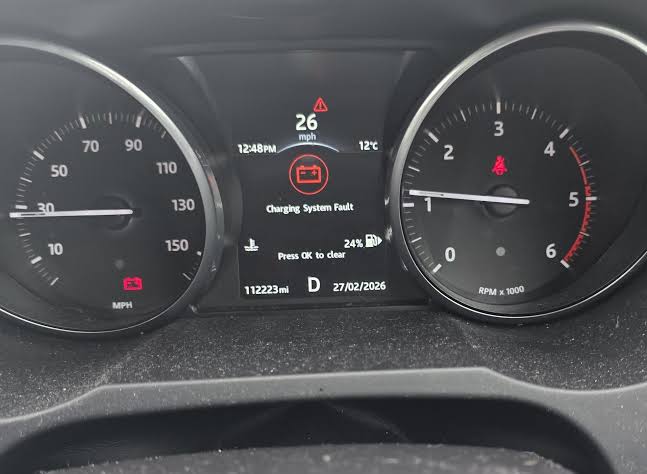
Stay calm and record the details first
Warnings such as Hybrid System Fault, charging problems or a vehicle that will not enter READY mode are among the reasons Range Rover owners contact us. With a plug-in hybrid such as the Range Rover Sport P400e, a warning like this understandably raises concerns about an expensive replacement of the entire battery pack. But the message alone does not identify what is damaged. It reports a condition detected by the control system.
The following steps do not involve working on the vehicle’s high-voltage system. They are intended to help you safely document its condition and check normally accessible items.
Six steps you can take yourself
- Write down the exact dashboard message. Word for word, including any additional messages and warning lights illuminated at the same time.
- Note what the vehicle does and does not do. Does it start? Does it enter READY? Does it run on the combustion engine? Does it charge from a socket or wallbox? Did the fault occur once, or does it recur?
- Take photographs. Capture the message on the display, the state-of-charge indicator and, where relevant, the charging station’s behaviour. A photograph is much more useful for assessment than a description from memory.
- Keep the diagnostic codes. If the fault codes have already been read, request the report. Diagnostic data are most valuable when saved together with the circumstances in which the fault occurred.
- Check only normally accessible items. Check that the charging cable is properly connected, that there is no visible damage to the cable or connector and that the charging point itself is not reporting a fault.
- Submit the information for professional assessment. The more complete the information, the more accurate the initial assessment and the fewer unnecessary steps later. As our documented P400e case involving a NOT READY condition shows, finding the cause takes measurements, not guesswork based on a single message.
If the vehicle will not enter READY, do not try improvised fixes. At this stage, documenting its condition is more valuable than trying to get it running again.
What not to do at this stage
- Do not access the vehicle’s high-voltage system or disconnect hybrid system components. Work on the HV system must be carried out only by a trained person with appropriate equipment.
- Do not clear fault codes before recording them along with the circumstances in which they occurred. Clearing the fault memory may erase important information about how the fault arose and make subsequent diagnostics more difficult.
- Do not judge the battery’s condition from a single fault code. A code describes a phenomenon, not a specific faulty component.
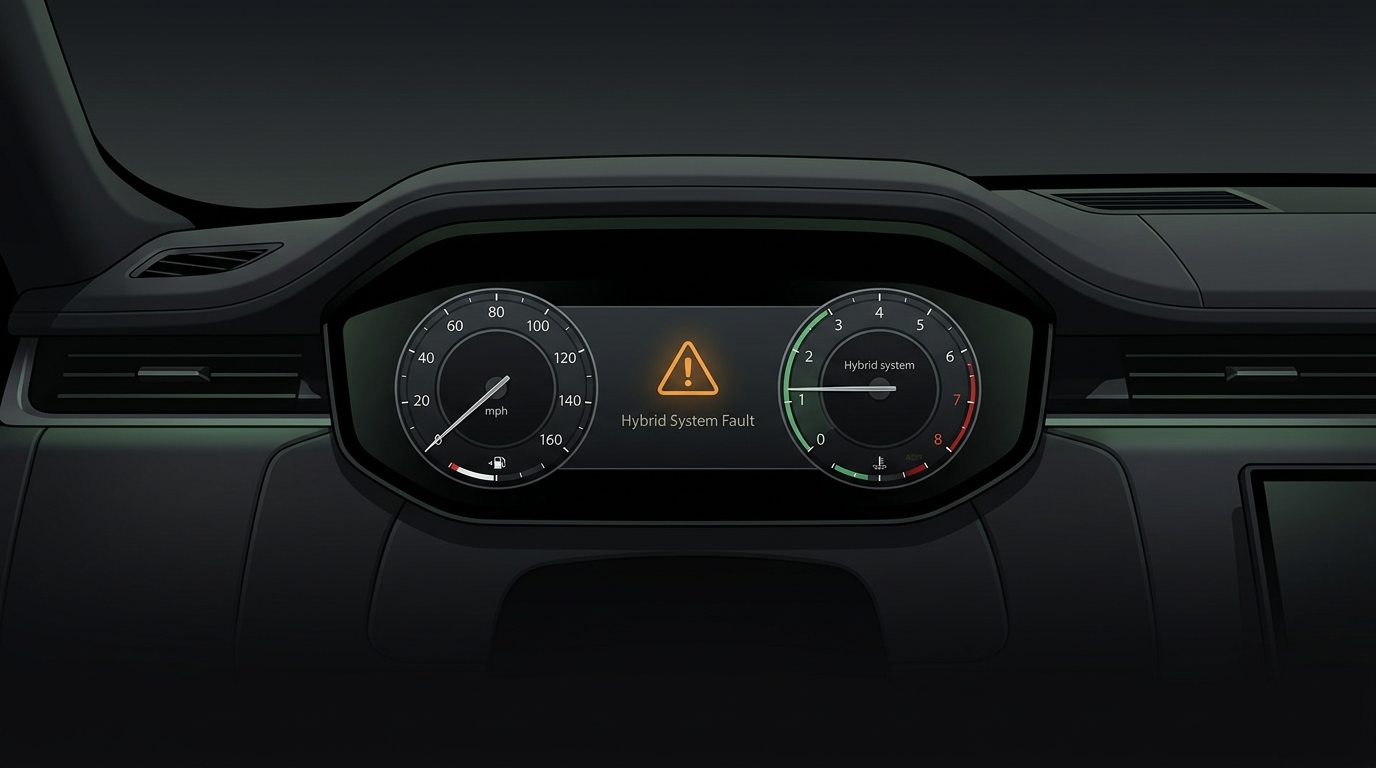
Where the cause may lie
A hybrid system warning can originate in a wide range of areas: the condition of the battery pack itself, its internal control and monitoring, the charging path, sensors or communication between control units. The condition of the vehicle’s low-voltage (12V) system is also routinely checked during diagnostics. Only measurements can establish which area is actually responsible in a particular case.
What to send us for an initial assessment
- Vehicle model and year
- Exact wording of the message
- Photographs of the instrument cluster
- Diagnostic report / DTCs, if available
- When the problem appeared
- Whether the vehicle enters READY
- Whether charging starts
What to do next
You can send us the information you have gathered without obligation. Based on it, we will suggest the next step that makes sense in your case.
Common questions
Can I still drive the vehicle?+
In general, we do not recommend continuing to drive after a hybrid system fault appears until the condition has been assessed. However, this depends on the specific fault message and the vehicle’s behaviour. If the vehicle will not enter READY or reports restricted propulsion, do not try to force it to drive.
Should I have the fault codes cleared?+
Only after they have been recorded together with the circumstances in which they occurred. Clearing the fault memory may erase important information about how the fault arose and make subsequent diagnostics more difficult.
How much does the initial assessment cost?+
The initial assessment of the information you send is free and without obligation.
Sources
- Land Rover – Range Rover Sport (L494) P400e, Owner’s Handbook / iGuide: Hybrid System, Charging and Warning Messages sections — Official manufacturer documentation for the relevant generation and model year
- Documented R/EVIVE case: Range Rover Sport P400e, NOT READY condition and charging fault — Internal case report
Related to this article
Do you have a similar warning or a full-pack replacement quote?
Send the fault code list or a photo of the warning for a free first assessment.